Who are EAs
About Energy Advisors
Energy Advisors (EAs) are specially trained individuals registered with Natural Resources Canada (NRCan) to assess the energy performance of homes across Canada.
They play a vital role in helping homeowners, builders, and renovators make informed decisions about energy upgrades and building performance. Using standardized procedures under the Government of Canada’s EnerGuide Rating System, EAs conduct in-depth assessments to measure how much energy a home consumes and identify opportunities to improve efficiency.
The real value of working with an EA goes beyond these basic services. Leveraging their expertise throughout your project unlocks more strategic, resilient, and cost-effective solutions. Using a diverse set of skills and competencies, EAs can take your new or existing home project beyond a label, helping you build or maintain a home that is resilient, comfortable, durable, efficient and healthy.
EA Diverse Skill Set
Bylaws, Standards, Codes, Regulations
Energy, Resiliency, Efficiency
IT, Geometry, Math, Modelling
Relationships, Communication
Cost Savings, Incentives
Building Science – Whole House
Building Practices, Materials
Forensics, Analysis, Reports
EAs core services
Foundational Services Provided by EAs
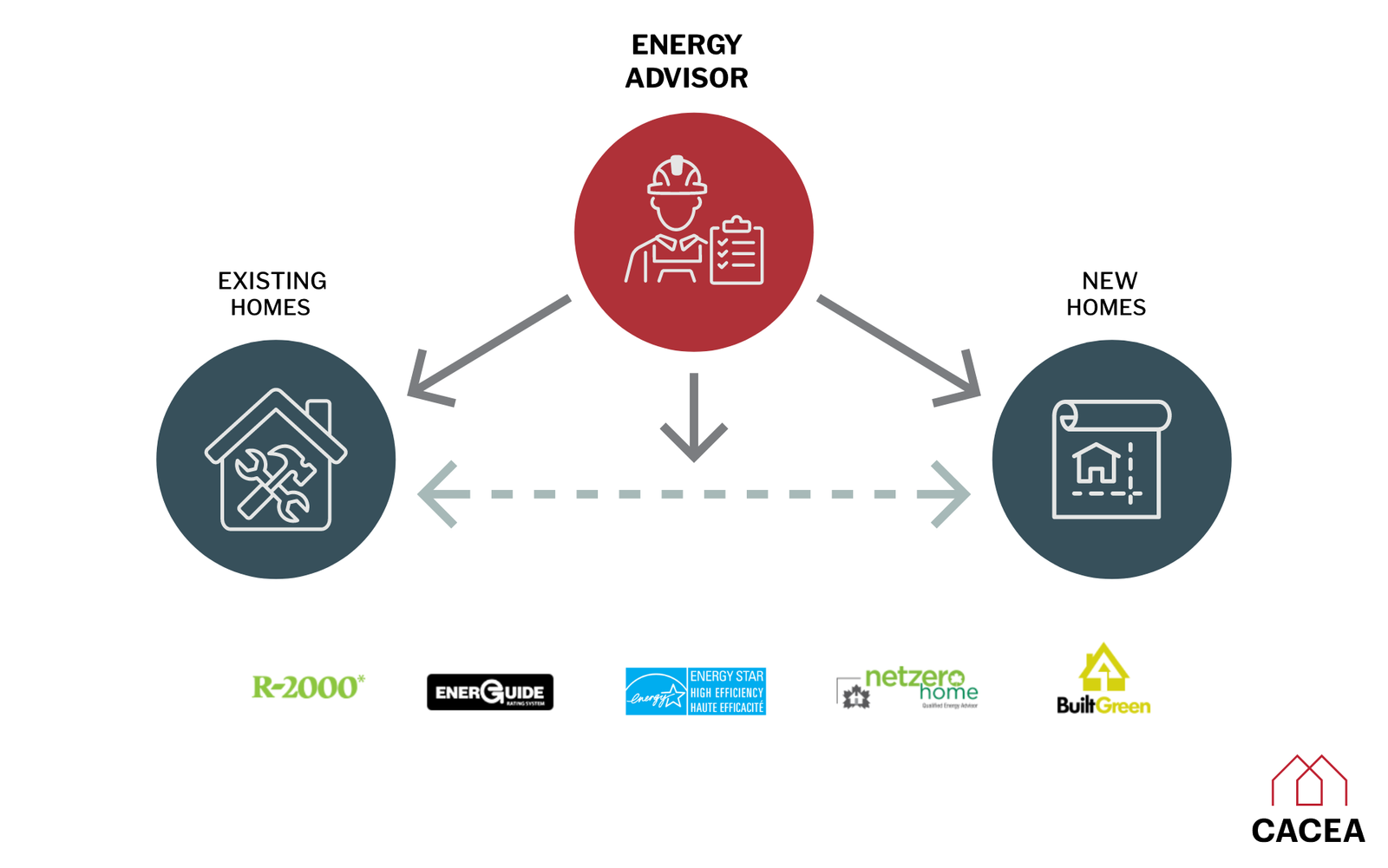
EAs are at the hub of low-rise, Part 9 residential housing and engage with a wide range of stakeholders. EAs can focus their work on new homes, existing homes, or both:


Work with an Energy Advisor for New Homes or Major Renovations
Engage an EA early—ideally at the pre-design stage or during construction. EAs facilitate collaboration among architects, designers, tradespeople, contractors, and other professionals. Their guidance helps explore and evaluate different energy efficiency strategies and compliance pathways.
Work with an Energy Advisor for Existing Homes
An EA can review your Renovation Upgrade Report (RUR) to identify areas for improvement and recommend additional opportunities for energy upgrades. This creates a clear roadmap toward a healthier, more efficient, and sustainable home.
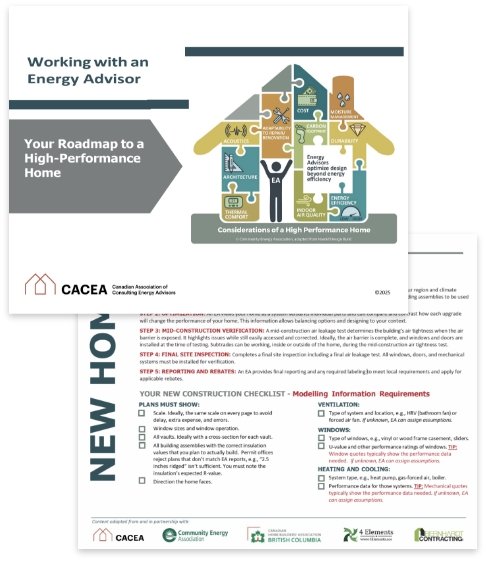
Going to work with an EA? “Working with an EA” document provides you with useful guidelines.
Understanding Different Roles & Responsibilities
Natural Resources Canada (NRCan)
Service Organization (SO)
Energy Advisor (EA)
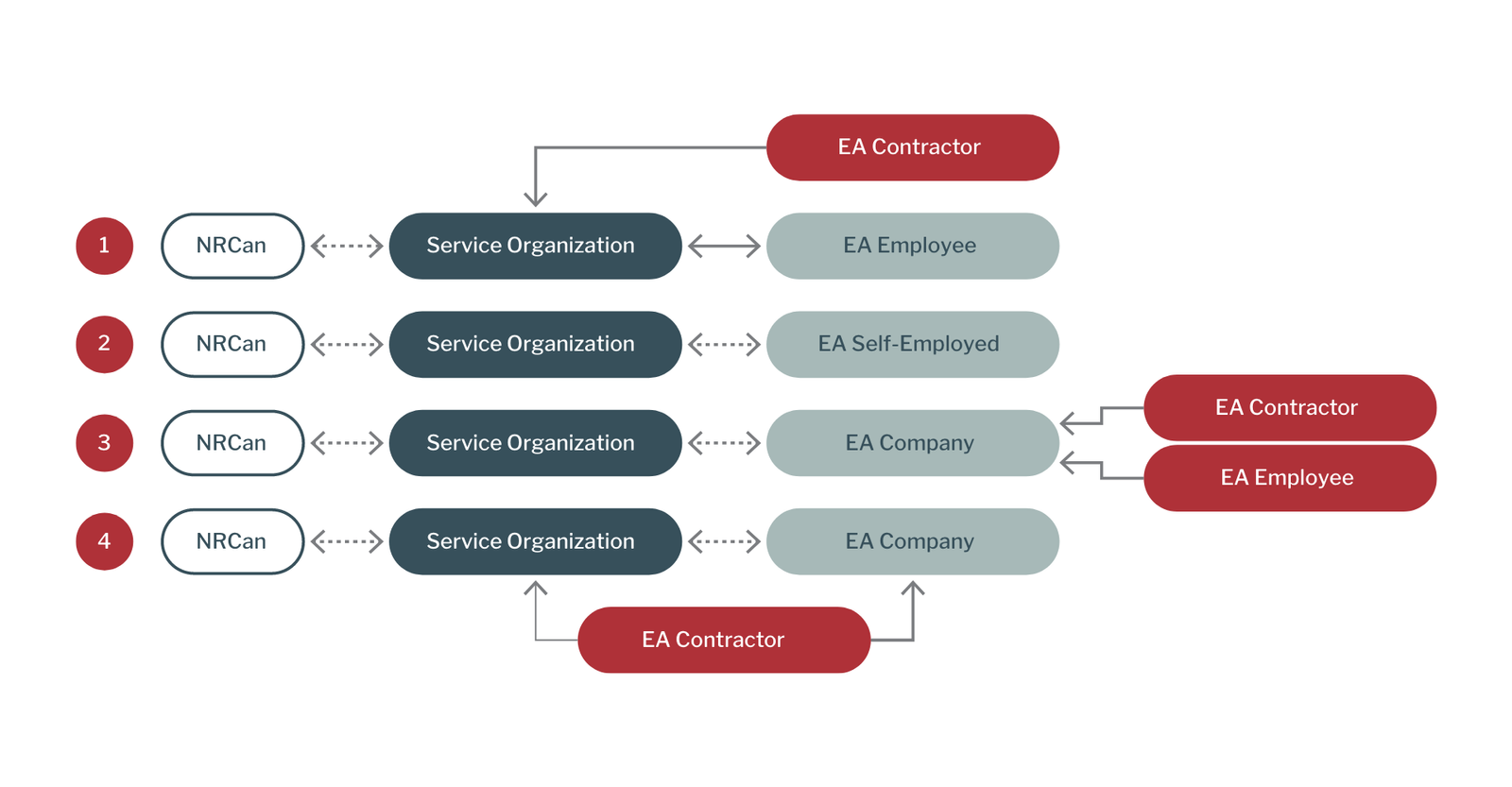
Common Business Relationships
EAs and SOs may work together under a variety of business structures. These relationships can vary based on business models, geographic reach, and individual or corporate arrangements.
1. Independent Energy Advisor or EA Company
An EA may work as a sole proprietor or through a company they own. In this model:
- The EA contracts with one or more licensed SOs
- The EA manages their own business operations(e.g., insurance, invoicing, and equipment)
2. EA Contractor
Some EAs work as contractors to an SO or EA company. In this case:
- The EA typically needs to have their own equipment, tools, and access to HOT2000. The contractor may provide administrative support and client leads
- Compensation is typically project- or file-based
3. Multiple Service Organization Affiliations
EAs are allowed to be affiliated with more than one licensed SO. This allows:
- Greater flexibility in choosing projects, programs, or geographic areas
- Participation in a wider range of retrofit or new construction programs
4. Cross-Provincial Relationships
There are no requirements for the SO to be located in the same province as the EA. This supports:
- Remote or regional work
- National program delivery and consistency
5. Expanded Program Services
Both EAs and SOs may offer additional services beyond EnerGuide assessments, such as:
- ENERGY STAR® for New Homes
- CHBA Net Zero
- Building code compliance consulting
- HVAC sizing and design (where qualified)
These services may require additional credentials, licensing agreements, or training, depending on the program and jurisdiction.
We’re Here to Help
Interested in becoming an EA?
Becoming an Energy Advisor (EA) in Canada involves meeting specific training, testing, and registration requirements
Choosing the right Service Organization
Choosing the right Service Organization (SO) is a key in shaping your career as an Energy Advisor (EA).
Want to become a member?
CACEA is committed to advancing the profession and supporting the success of our members.